
Organic Cashew Supplier Vietnam: What B2B Buyers Should Verify First
Introduction
Vietnam processes more cashew kernels than any other country in the world, and a growing share of that output now carries an organic label. That volume is exactly why “organic” on a cashew supplier’s website is not, by itself, proof of anything. Certification bodies, scope, and supply chain structure vary widely between exporters, and a buyer who orders on the strength of a logo alone carries that risk into their own supply chain.
This guide sets out what a procurement team should verify before placing an order with an organic cashew supplier in Vietnam: what the certificate actually covers, how to trace a shipment back to source, and which documents prove both.
Key Insights
- An organic certificate has a defined scope — product, processing site, and control body — that buyers should match against their specific order, not assume from the supplier's homepage.
- Certification and traceability are two separate proofs. A supplier can hold valid certification without offering batch-level traceability to farm level.
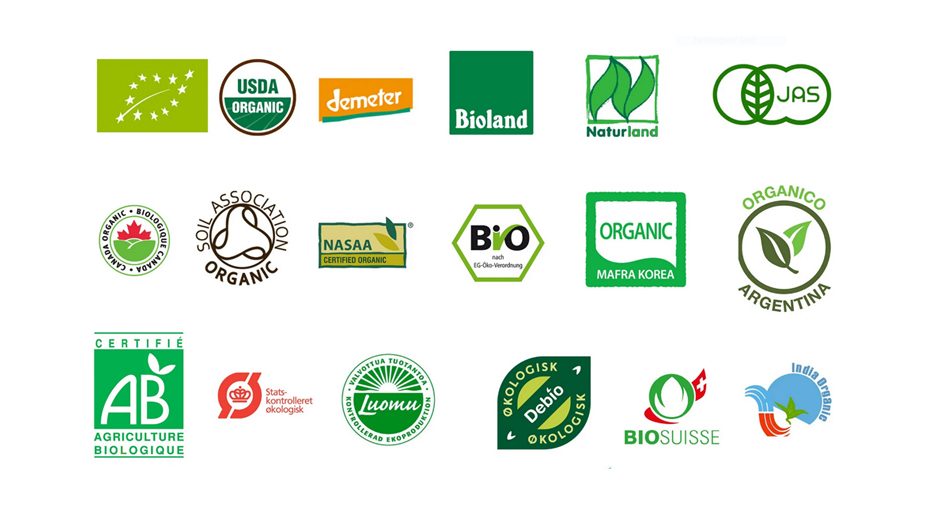
- USDA Organic, EU Organic, and JAS Organic each have their own control body and databases that a buyer can check independently before ordering.
- Supporting certifications — BRCGS, SMETA, and Fairtrade — verify food safety and labor practices that organic status alone does not cover.
- The strongest suppliers can produce a transaction certificate, a certificate of origin, and farm-level sourcing records for the specific batch being shipped, not just the company's annual certification.

What "Certified Organic" Actually Means for a Cashew Supplier
An organic certificate for a cashew supplier confirms that a defined scope of product and process — not the company as a whole — meets a specific organic standard. That scope is set by an accredited control body, which audits farms, processing sites, and handling procedures against the standard and issues a certificate tied to a specific product, facility, and time period.
This distinction matters because a company can hold a valid organic certificate for raw cashew kernels processed at one facility while a different product line, or a different processing site, falls outside that scope. Buyers should confirm that the certificate covers the exact product and HS code they intend to import, not assume that one certificate applies company-wide.
The three certifications that matter most for cashew buyers each work differently:
- USDA Organic (NOP) — required for import into the United States. Verifiable through the USDA Organic Integrity Database, which lists the certified operation, scope, and certifying agent.
- EU Organic — required for import into the European Union. Verified through the EU's TRACES NT system, which issues an electronic Certificate of Inspection (COI) for each shipment.
- JAS Organic — required for import into Japan. Verified through the certifying body's own registry and the JAS mark applied to packaging.
What to Verify Before You Place an Order
1. Certification scope and control body
Ask the supplier for the certificate number and the name of the accredited control body, then check it directly against the relevant database rather than relying on a PDF sent by email. A certificate that cannot be independently verified against the issuing body's own records is not proof of anything.
2. Farm-to-export traceability
Certification confirms compliance with a standard; it does not by itself confirm where a specific shipment's raw material came from. Ask how the supplier connects a given export batch back to the farms or cooperative that grew it — through farm registration records, GPS-mapped growing areas, or an internal lot-tracking system. A supplier sourcing through a farmer cooperative should be able to describe how many households and hectares are enrolled, and how that data is tied to specific harvests.
3. Supporting food safety and ethical sourcing certifications
Organic status covers farming and handling inputs. It does not cover food safety management systems or labor conditions, which is why buyers — particularly retail and foodservice buyers — typically ask for these alongside organic certification:
- BRCGS (or an equivalent GFSI-recognized standard) — food safety management at the processing facility.
- SMETA (Sedex Members Ethical Trade Audit) — labor practices and ethical sourcing conditions at the facility and, where applicable, at farm level.
- Fairtrade — verified pricing and trading terms with the farming cooperative.
A supplier holding organic certification without any of these has typically not been audited on food safety management or labor conditions — worth flagging explicitly if either matters to your buyer's compliance requirements.
4. Batch-specific documentation
Company-level certification is necessary but not sufficient. For the specific order being placed, request:
- A transaction certificate (TC) or organic certificate of inspection tied to that shipment.
- A certificate of origin.
- A phytosanitary certificate.
- Lab results for moisture content and aflatoxin testing on the batch.
A supplier that can produce these without delay is operating documentation as a routine part of shipping, not as a one-off request.
Why Verification Matters: The Cost of Skipping It
Certificate misuse in agricultural exports typically takes one of two forms: a certificate whose scope does not cover the product actually being shipped, or a certificate that has expired or been suspended without the buyer's knowledge. Either one can result in a shipment being rejected at customs, a retail contract being terminated for non-compliance, or a costly compliance review triggered by the buyer's own certification body.
The verification steps above are the same checks a customs authority or a buyer's own auditor will eventually run. Doing them before the order is placed is faster and less costly than doing them after a shipment is held.
Verification Checklist: What to Request and What It Proves
| Document / check | What it proves | Where to verify independently |
|---|---|---|
| Organic certificate number + control body name | Certified scope, product, and facility | USDA Organic Integrity Database (US) / EU TRACES NT (EU) / JAS certifying body registry (Japan) |
| Farm/cooperative sourcing records | Traceability from farm to processing | Supplier-provided; ask for household count, hectare data, and lot-tracking method |
| BRCGS certificate | Food safety management at the processing facility | BRCGS Directory |
| SMETA audit report (SMETA/Sedex) | Labor practices and ethical sourcing conditions | Sedex platform (buyer access required) |
| Fairtrade certificate | Verified trading terms with the farming cooperative | Fairtrade International database |
| Transaction certificate (shipment-specific) | This exact batch is within certified scope | Issued by the control body per shipment |
| Certificate of origin | Country of origin for customs purposes | Issued by chamber of commerce or relevant authority |
| Lab test results (moisture, aflatoxin) | Product safety and shelf-life compliance | Supplier-provided, request accredited lab reference |
How BioValley Meets This Standard
BioValley's organic cashew supply runs through the Truecoop farmer cooperative model, supporting more than 2,500 farming households across more than 5,400 hectares of certified organic cultivation. The company holds seven certifications spanning organic status, food safety, and ethical sourcing — including USDA Organic, EU Organic, JAS Organic, BRCGS, SMETA, and Fairtrade — and ships to more than 20 countries.
Every export batch can be traced back through the cooperative's farm records to the specific growing area it came from, and BioValley provides transaction certificates, certificates of origin, and lab testing documentation as a standard part of the order process, not on request only.
Buyers evaluating BioValley alongside other Vietnamese exporters are welcome to run every check in this article against BioValley's certificates directly.


Final Considerations
An organic label is a starting point for evaluating a cashew supplier, not an endpoint. The certificate's scope, the traceability behind it, and the supporting food safety and ethical sourcing standards each answer a different question — and a buyer who checks all three before ordering is far less likely to face a compliance problem after the shipment has already left Vietnam.