

Media
Introduction
Most cashew sourcing content is written for a retail snacking buyer choosing between whole kernel flavours. Roasted cashew pieces are a different product for a different buyer entirely. Bakeries, confectioners, cereal manufacturers, and ice cream producers do not need a whole kernel, they need a specific piece size, roasted to a specific profile, that behaves consistently when folded into a dough, sprinkled on a topping, or mixed into an inclusion line. This guide is written for that buyer, and covers how roasted cashew pieces are graded, what to specify when ordering, and how BioValley approaches this category alongside its whole kernel and flavoured cashew lines.
Key Insights
- Roasted cashew pieces are graded by size using standardized wire mesh sieves under the AFI (Association of Food Industries) standard, not by visual estimate.
- The two common piece grades are LP (large pieces) and SP (small pieces), each suited to different manufacturing applications.
- Organic certification for a roasted piece product depends on the kernel, the roasting process, and the processing facility all carrying certified scope together, the same requirement that applies to any organic roasted or flavoured cashew product.
- Ingredient manufacturers should specify piece size, roast level, organic certification scope, and moisture content explicitly, since these vary meaningfully between suppliers even within the same nominal grade.
- BioValley processes cashew across whole kernel and piece grades at BioFactory, with roasting capability already applied to its flavoured kernel lines.
What Are Roasted Cashew Pieces (Chopped Cashew), and How Do They Differ From Whole Kernels
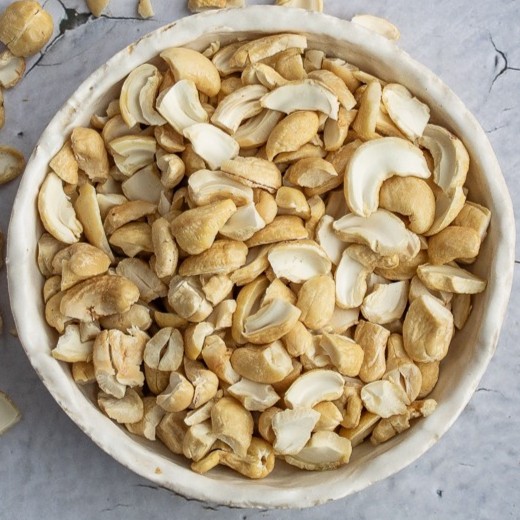
Roasted cashew pieces are cashew kernels that have been broken into smaller fragments, either during processing or by design, and roasted to a defined profile before being sold as an ingredient rather than a standalone snack. The distinction from whole kernels matters operationally. A whole kernel is chosen for appearance and eating texture. A piece is chosen for how it performs inside another product, how evenly it distributes through a dough or batter, how it holds up under baking heat, and how consistently it toasts given its smaller surface-to-mass ratio compared to a whole kernel.
How Cashew Pieces Are Graded: The AFI Sieve Standard
Cashew piece sizing follows the AFI (Association of Food Industries) specification, the grading system widely used across the global cashew trade, including by many processors in Vietnam. Pieces are sized using standardized wire mesh sieves with square openings, not round-hole sieves, since the two are not considered equivalent under the standard. A piece lot is passed through a stacked set of sieves, with strict tolerances on how much material is allowed to pass through or be retained at each level, which is what keeps a "large pieces" order consistent from one shipment to the next rather than varying by whoever is sorting that day.
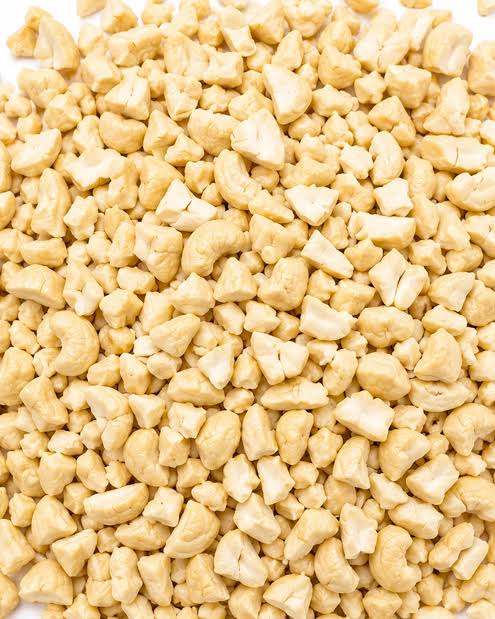
The two most common piece grades ingredient buyers order are:
| Grade | AFI designation | Typical use |
|---|---|---|
| Large Pieces | LP | Visible inclusions, bakery toppings, larger confectionery pieces |
| Small Pieces | SP | Granola, cereal, fine confectionery blending, cashew meal precursor |
Buyers can review the full AFI specification directly through the Association of Food Industries, the body that maintains this grading standard.
Why Food Manufacturers Choose Pieces Over Whole Kernels
Cost is one factor, since piece grades are typically priced below whole kernel grades of the same quality tier. But cost is rarely the only reason a manufacturer specifies pieces. Pieces distribute more evenly through a mixed product than whole kernels do, which matters for consistency in a dough, batter, or granola cluster. They also roast faster and more evenly than a whole kernel, given their smaller mass, which affects flavour development in a way manufacturers building a specific product profile need to control for directly rather than treat as a side effect of using a smaller format.
Common Applications: Bakery, Confectionery, Cereal, and Inclusions
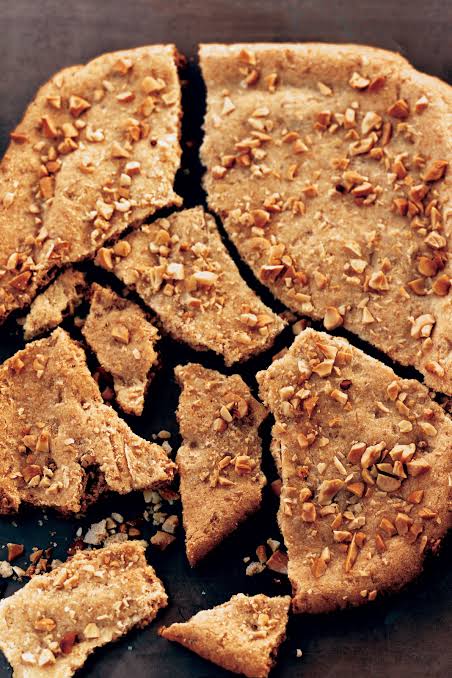
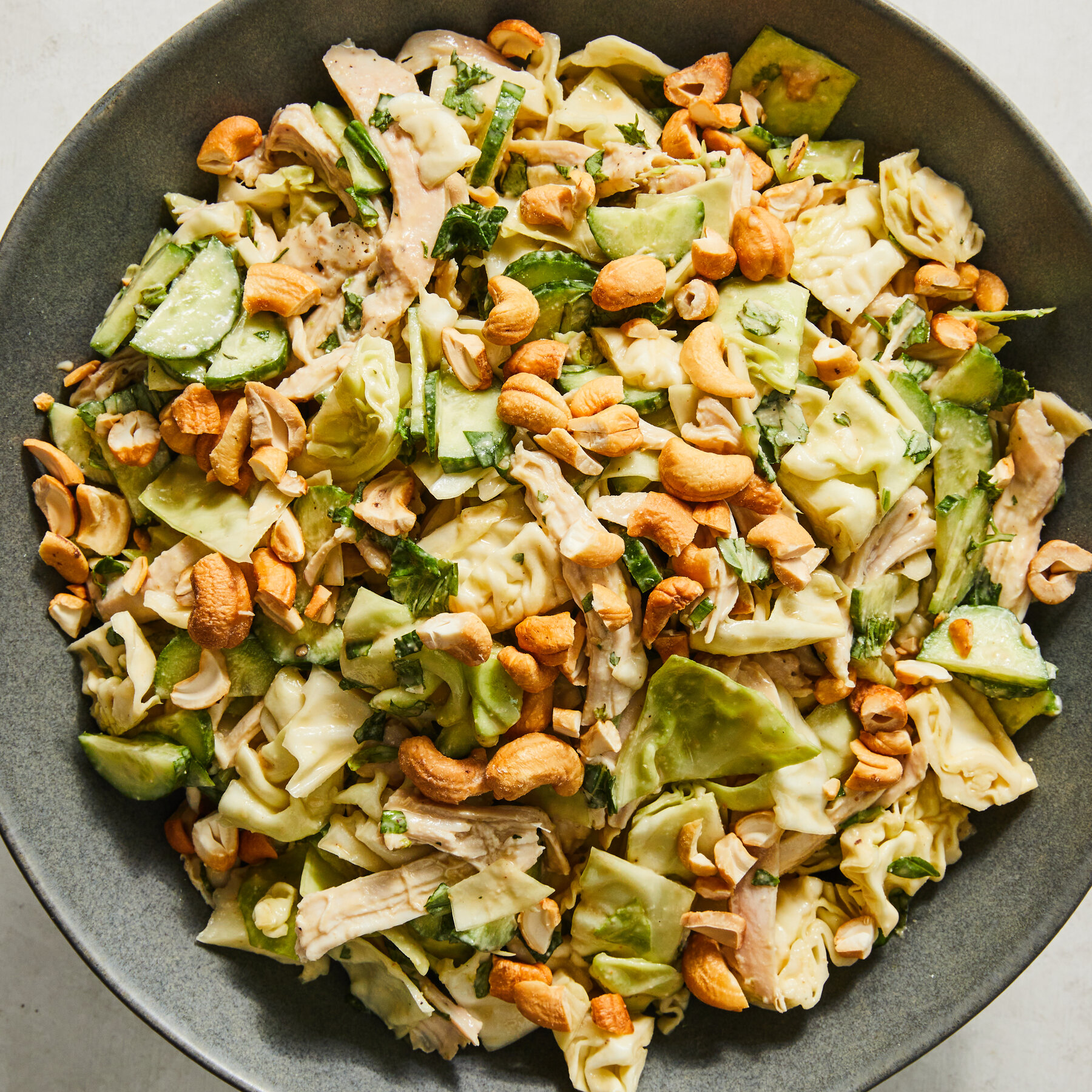
Roasted cashew pieces show up across a fairly wide manufacturing range. Bakery applications use them as visible toppings and mix-ins for cookies, muffins, and pastries. Confectionery applications fold them into bars, clusters, and chocolate-coated products. Cereal and granola manufacturers use smaller piece grades as a consistent, evenly distributed inclusion. Ice cream and frozen dessert producers use roasted pieces for texture contrast in a way a whole kernel would disrupt.
BioValley's organic added-value cashew range already applies roasting across multiple flavour lines at whole kernel scale, and the same roasting process and certification scope extends to piece-format orders for manufacturers building products in these categories.
Organic Certification Considerations for Roasted Cashew Pieces
The same rule that applies to any organic roasted or flavoured cashew product applies here. Organic status depends on the kernel, the roasting process, and the processing facility all carrying certified scope together, not the kernel alone. A piece product carries an added wrinkle worth checking directly with a supplier: pieces are sometimes sourced or blended differently from whole kernels within the same facility, so buyers should confirm that the specific piece lot they are ordering, not just the facility in general, falls within certified organic scope.
What to Specify When Ordering Roasted Cashew Pieces
- Piece size grade (LP, SP, or a specific sieve range if your application needs tighter control than the standard grades)
- Roast level and colour target, since "roasted" alone covers a wide range of outcomes
- Organic certification scope for the specific piece lot, not only the facility
- Moisture content specification and target shelf life for your application
- Packaging format suited to your production line, bulk bag, carton, or a size matched to your own inventory system
- Whether you need a consistent supply across seasons or a one-time order, since this affects how a supplier plans sourcing
How BioValley Approaches Roasted Cashew Piece Orders
BioValley processes organic cashew across whole kernel grades (W240, W320, W450) and piece grades (including LP and SP) at BioFactory, sourced through its own farmer cooperative network in Vietnam. Roasting capability is already applied across BioValley's flavoured whole kernel lines, coconut, pepper, chilli, honey, wasabi, and salted, and the same processing and certification approach extends to roasted piece orders for ingredient manufacturers.
Piece-format and roasted-piece orders are typically discussed as part of a specification conversation rather than pulled from a fixed catalog listing, since manufacturers usually need a particular sieve range, roast profile, or packaging format matched to their own production line. Buyers can review BioValley's organic cashew kernels page for base grading detail, or the private label manufacturing guide for how a custom specification moves from brief to shipment.
Questions to Ask Before Ordering
- What piece size grades do you currently produce, and can you supply a specific sieve range if I need tighter control?
- Is the organic certification confirmed for the specific piece lot I am ordering, not only the facility generally?
- What roast profile options are available, and can I request a sample before committing to volume?
- What is the typical lead time for a piece-format order compared to a standard whole kernel order?
- Can you supply consistently across multiple production runs, or is this a one-time lot?
Final Considerations
Roasted cashew pieces are an ingredient decision, not a snacking decision, and the specification details that matter reflect that. Piece size grade, roast profile, and confirmed organic certification scope for the specific lot are the three things worth nailing down before placing an order, since a supplier who can answer all three precisely is generally better positioned to support a manufacturing line that depends on consistency, batch after batch. BioValley's cooperative sourcing and BioFactory processing already support the grading and roasting capability this category requires, alongside its whole kernel and flavoured lines.
Sourcing roasted cashew pieces for a manufacturing application?
Frequently Asked Questions
- What is the difference between roasted cashew pieces and whole roasted cashew? Pieces are broken kernel fragments, roasted and sold as an ingredient for another product, chosen for how they distribute and perform inside a dough, batter, or mix. Whole roasted cashew is chosen primarily for snacking appearance and eating texture.
- What do LP and SP mean in cashew grading? LP means large pieces and SP means small pieces, two of the common broken kernel grades under the AFI (Association of Food Industries) standard, sized using standardized wire mesh sieves.
- Is organic certification different for cashew pieces compared to whole kernels? The underlying requirement is the same, the kernel, the process, and the facility all need certified scope. Buyers should confirm certification specifically covers the piece lot they are ordering, since pieces are sometimes sourced or blended differently from whole kernels within the same facility.
- What industries use roasted cashew pieces most? Bakery, confectionery, cereal and granola manufacturing, and ice cream or frozen dessert production are the most common applications, each typically preferring a different piece size grade.
- Can BioValley supply roasted cashew pieces for a private label or manufacturing order? BioValley processes cashew across whole kernel and piece grades, with roasting capability already applied to its flavoured kernel range. Piece-format and roasted-piece orders are discussed as a specification conversation, since manufacturers typically need a particular sieve range or roast profile matched to their production line.


