BRCGS, HACCP and Organic Certification: What Cashew Buyers Should Check
Organic Cashew Certification, BRCGS, HACCP: What Cashew Buyers Should Check
Organic cashew certification, BRCGS Food Safety and HACCP answer different questions about a supplier. Organic certification concerns compliance with a particular organic production and handling system. HACCP addresses the identification and control of food safety hazards. BRCGS Food Safety provides a broader framework for assessing a processing site’s food safety and quality management arrangements.
For buyers comparing organic cashew suppliers, these distinctions matter. A certificate can support an approval decision only when it relates to the product and operation being assessed. Before requesting a quotation or approving a sample, buyers should establish which documents cover the proposed product, where it will be processed and how the information can be verified.
Key Insights
Organic certification and food safety certification serve different purposes.
A BRCGS certificate should be checked against the relevant site, products and processing activities.
HACCP is a hazard-control system; buyers should clarify what any accompanying certificate represents.
Organic kernel documentation should not automatically be applied to roasted or flavoured cashews.
Product specifications, traceability information and relevant testing support certification during supplier assessment.
Organic Certification vs Food Safety Certification
A supplier may display several logos, but each represents a different type of assurance. The first step is to separate organic status from food safety management and product quality.
| System or document | What it addresses | What a cashew buyer should check |
|---|---|---|
| Organic certification | Compliance with the applicable organic production and handling requirements | Certified operation, activities, product coverage and current status |
| BRCGS Food Safety | Assessment of a site against defined food safety and quality management requirements | Site identity, scope, exclusions and certification status |
| HACCP | Identification and control of significant food safety hazards | Application to the actual product and processing route |
| Product specification | The agreed characteristics and requirements of the product | Grade, physical quality, relevant limits, packaging and storage information |
| Test report | Results for the sample examined | Product or lot identity, test methods, results and date |
These documents work together. Organic certification does not replace the need for food safety controls, while a food safety certificate does not establish that a product is organic. A test report provides another type of evidence, tied to the sample tested.

What Organic Cashew Certification Should Tell You
Organic certification relates to a defined organic system and certified operation. For example, the USDA explains that organic certification verifies whether a farm or handling facility complies with USDA organic regulations.
When buying organic cashews, review the operation and product information together. Confirm who holds the certificate, which activities are covered and whether the product being offered appears in the relevant certificate information or supporting addenda.
This is particularly important when growing, processing, trading and exporting involve different entities. A certificate associated with the growing area should not be assumed to cover every later processing or packing activity.
Match the Documentation to Your Destination Market
USDA Organic, EU Organic and Organic JAS refer to different organic systems. Tell the supplier where the product will be sold so the relevant documentation and trade requirements can be discussed early.
An operation’s organic certificate and the documents needed for a shipment also serve different purposes. For example, the European Commission’s organic trade guidance explains that organic imports into the EU require the appropriate electronic certificate of inspection, administered through TRACES.
Organic certification should not be presented as a guarantee that a product has no residues or cannot contain a food safety hazard. Buyers still need to assess the product’s safety, specification and suitability for its intended use.
BRCGS vs HACCP: What Is the Difference?
BRCGS Food Safety and HACCP are related to food safety management, but they are not interchangeable terms.
BRCGS Food Safety: Review the Site and Scope
The BRCGS Global Standard Food Safety provides a framework for managing product safety, integrity, legality and quality in food manufacturing, processing and packing.
For a cashew buyer, the certificate’s scope is especially useful. Check the facility address, the activities and products included, any exclusions and the current certification status. The BRCGS Directory provides a route for validating certification information.
If your order involves roasting, flavouring and packing, establish whether those activities are covered at the relevant site. A certificate for a different facility or a narrower processing scope needs clarification before it can support your supplier review.
HACCP: Understand How Hazards Are Controlled
HACCP stands for Hazard Analysis and Critical Control Point. It is a systematic approach to identifying, evaluating and controlling food safety hazards.
The FDA’s HACCP guidelines describe seven principles, covering hazard analysis, critical control points, critical limits, monitoring, corrective actions, verification and record keeping.
Rather than looking for a logo alone, ask how the supplier’s food safety system applies to the proposed cashew product. Where appropriate, the quality team can explain the relevant controls and verification arrangements.
If a supplier provides a “HACCP certificate”, clarify the issuing organisation, assessment scheme and activities covered. A certificate showing that an employee completed training is different from an assessment of a facility’s food safety system.

Do Organic Kernels and Roasted Cashews Need Different Checks?
The review should follow the exact product being purchased.
For bulk organic cashew kernels, buyers may need to confirm the grade, specification, processing facility, packing arrangements and organic coverage. For roasted or flavoured cashews, the formulation, added ingredients and additional processing activities also need consideration.
A document covering plain organic kernels should not automatically be applied to a pepper-roasted, honey-roasted or private label product. Ask the supplier to identify the documentation relevant to that finished item.
The same approach applies during product development. If a recipe, production site or packing arrangement changes, check whether the specifications and supporting documents still apply to the revised product.
How BioValley Applies This to Different Cashew Products
BioValley’s product offering spans organic cashew kernels for ingredient buyers and roasted or flavoured organic cashews for retail, foodservice and private label projects. That range gives our team a practical starting point for discussing how product requirements change from one application to another.
For a manufacturer purchasing W320 kernels, the review may focus on grade, physical quality, bulk packaging and organic coverage. For a buyer developing a roasted cashew snack, the discussion also includes formulation, flavour, finished-product specifications and packaging. OBIO enquiries bring another consideration: selecting an existing finished product that fits the intended sales channel.
Our role is to connect these commercial requirements with the relevant product and processing information. Rather than sending a generic collection of certificates, the useful starting point is to identify the exact item and the facility involved.
Organic cashew certification & Five Questions to Ask Before Approving the Documents
1. Does the Operation Match the Proposed Supply Arrangement?
Check the legal entity and facility details. If the seller, processor and exporter are different organisations, ask the supplier to explain their roles and provide the relevant documentation.
2. Is the Certification Status Current?
Use the appropriate official directory, certifying body or verification route where needed.
Be careful about relying on an expiry date alone. USDA’s organic certificate instructions state that organic certificates cannot include expiration dates. Current status, annual updates and product coverage should still be reviewed.
3. Does the Scope Cover the Product and Activities?
Match the proposed item to the certificate and supporting information. Confirm the activities involved, especially if the order includes roasting, flavouring, repacking or a private label format.
4. Are the Specification and Sample Consistent?
Check that the product name, grade and format in the specification correspond to the sample being evaluated. Certification does not replace a clear agreement on quality and acceptance requirements.
5. What Other Evidence Does Your Team Need?
Depending on the product and project, the review may also require traceability information, relevant testing, packaging details and storage instructions. Define those needs early so the supplier can prepare a useful response.
For a broader approval process, see BioValley’s guide to evaluating an organic cashew supplier in Vietnam.
BioValley’s Processing Expertise: From Organic Kernels to Finished Products
BioValley Vietnam connects organic cashew sourcing with processing, product development and packing. Our published capabilities include shelling and peeling, roasting and drying, grading and sorting, recleaning and pasteurisation, alongside flexible packaging and private label options. The production route for an order depends on the selected product and requirements.
For buyers, these capabilities matter because a supplier must do more than provide a certificate. It must also understand how the ingredient will be used, which processing steps are needed and what information the buyer’s procurement and quality teams require.
BioFactory and the Facility Behind Your Order
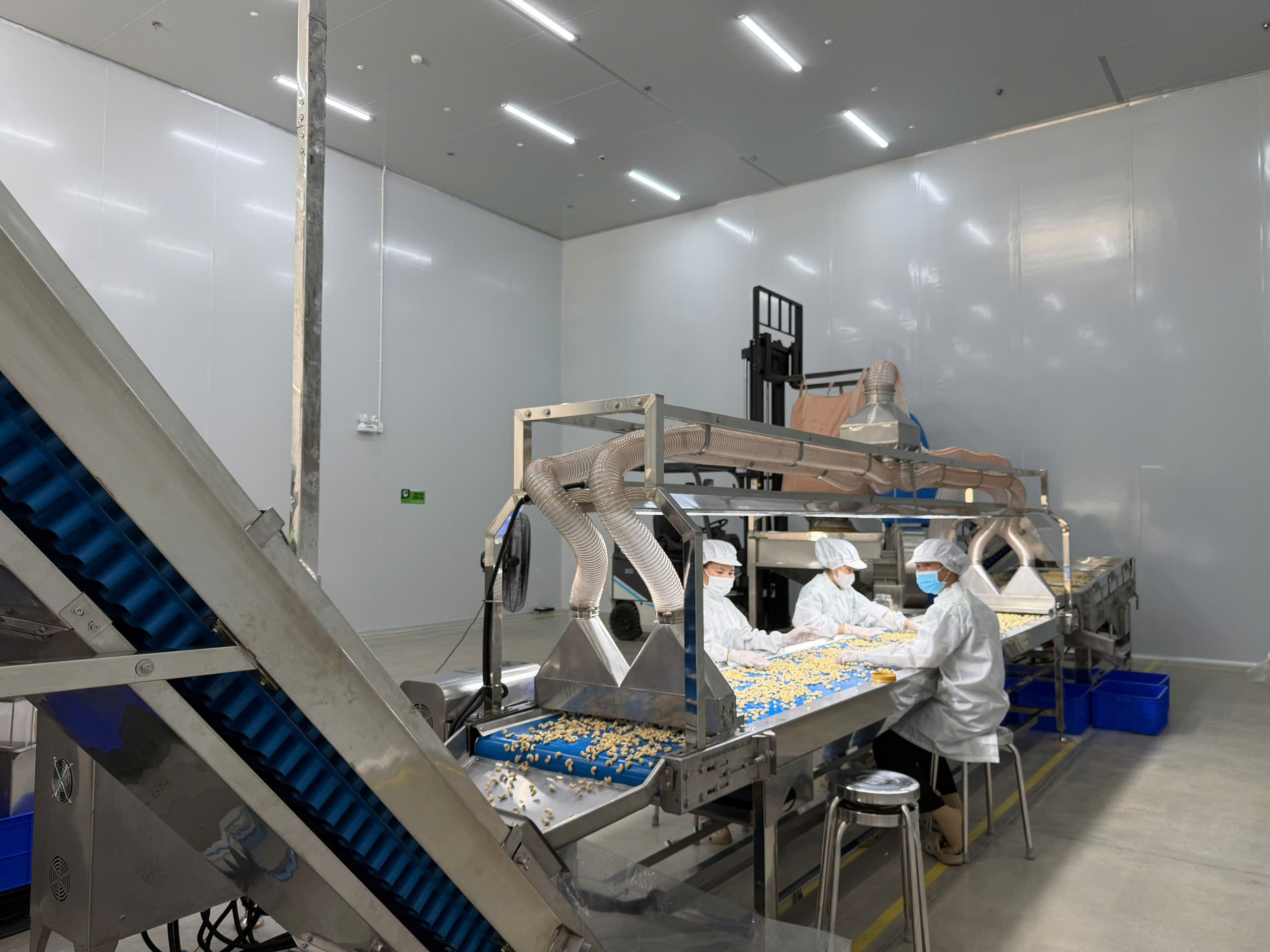
BioValley’s BioFactory is located at Lot B4, Thanh Hai Industrial Park, Bao An Ward, Khanh Hoa Province, Vietnam. Our factory information introduces the processing and packing capabilities available for discussion.
When assessing an order, ask our team to confirm the facility responsible for each relevant activity. This is particularly useful when a project involves several steps, such as kernel selection, roasting, flavouring and final packing. The applicable certification scope should be reviewed against that production arrangement.
A facility photograph helps buyers understand the operation, while the supporting documents establish the scope relevant to their supplier review. Both have a place in presenting the factory clearly.
Quality Management Across the Processing Stages
BioValley’s quality management approach begins with raw material sourcing and continues through processing, testing, packaging and storage. It combines defined product specifications, risk-based quality controls, organic integrity and traceability.
In practice, this means discussing product quality and certification together. For an organic kernel enquiry, the specification establishes the grade and agreed characteristics. For a roasted or flavoured product, the review also considers the formulation and finished-product requirements. Relevant testing and documentation then support the assessment according to the product and project.
Supporting Buyers Through Product Evaluation
Our team works with buyers to turn an initial enquiry into a clearer product brief. Useful starting information includes the intended application, destination market, preferred format, expected volume and any existing technical specification.
From there, the discussion can address suitable products, sample arrangements, packaging and the documents needed for evaluation. A buyer developing a private label snack may need a different response from a manufacturer replacing an existing kernel ingredient. Understanding that difference helps us prepare information that is useful to the project.