
Human-Centered Livelihoods: Empowering Communities to Build Their Own Futures
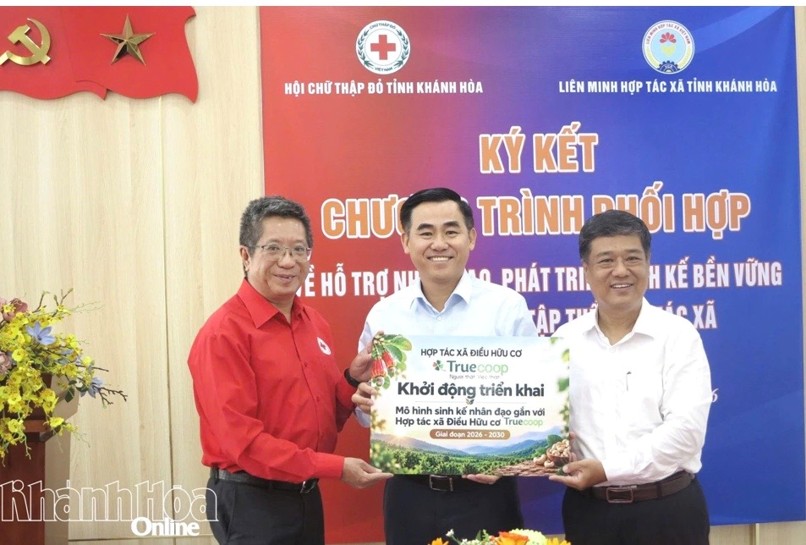
TrueCoop Cooperative of Organic Cashews has proposed a sustainable livelihood model for organic cashew-growing communities in Anh Dung and Bac Ai Dong communes, within the cooperation framework between the Khanh Hoa Provincial Red Cross and the Khanh Hoa Cooperative Alliance.
A seedling provided at the right moment can mark the beginning of a harvest. For a family to move beyond persistent hardship, that first contribution needs agricultural knowledge, employment opportunities, access to markets and an organisation willing to accompany them over time. These connections shape TrueCoop’s “Humanitarian Livelihoods” model, a human-centered approach to helping communities develop productive capacity and greater control over their futures.
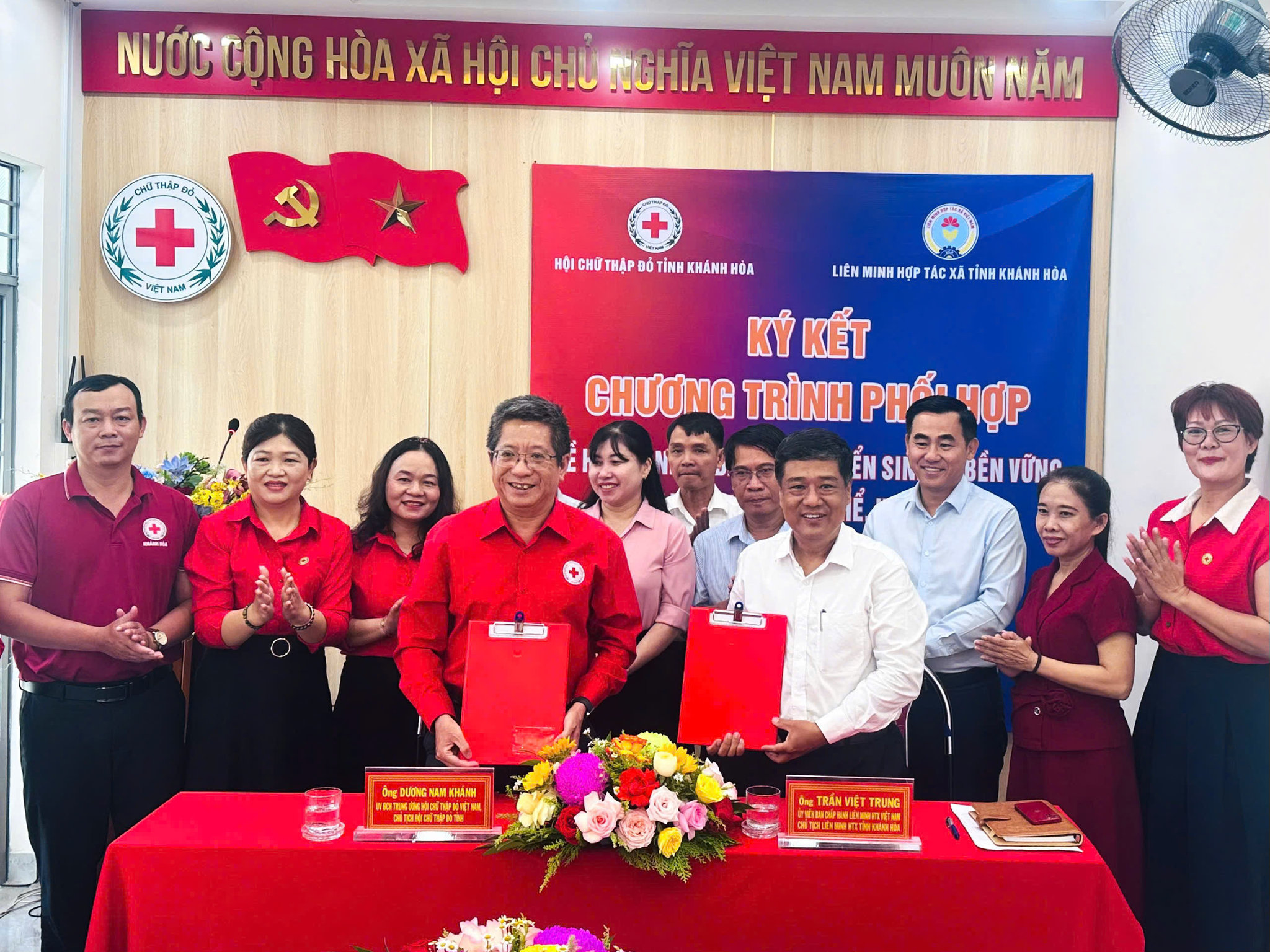
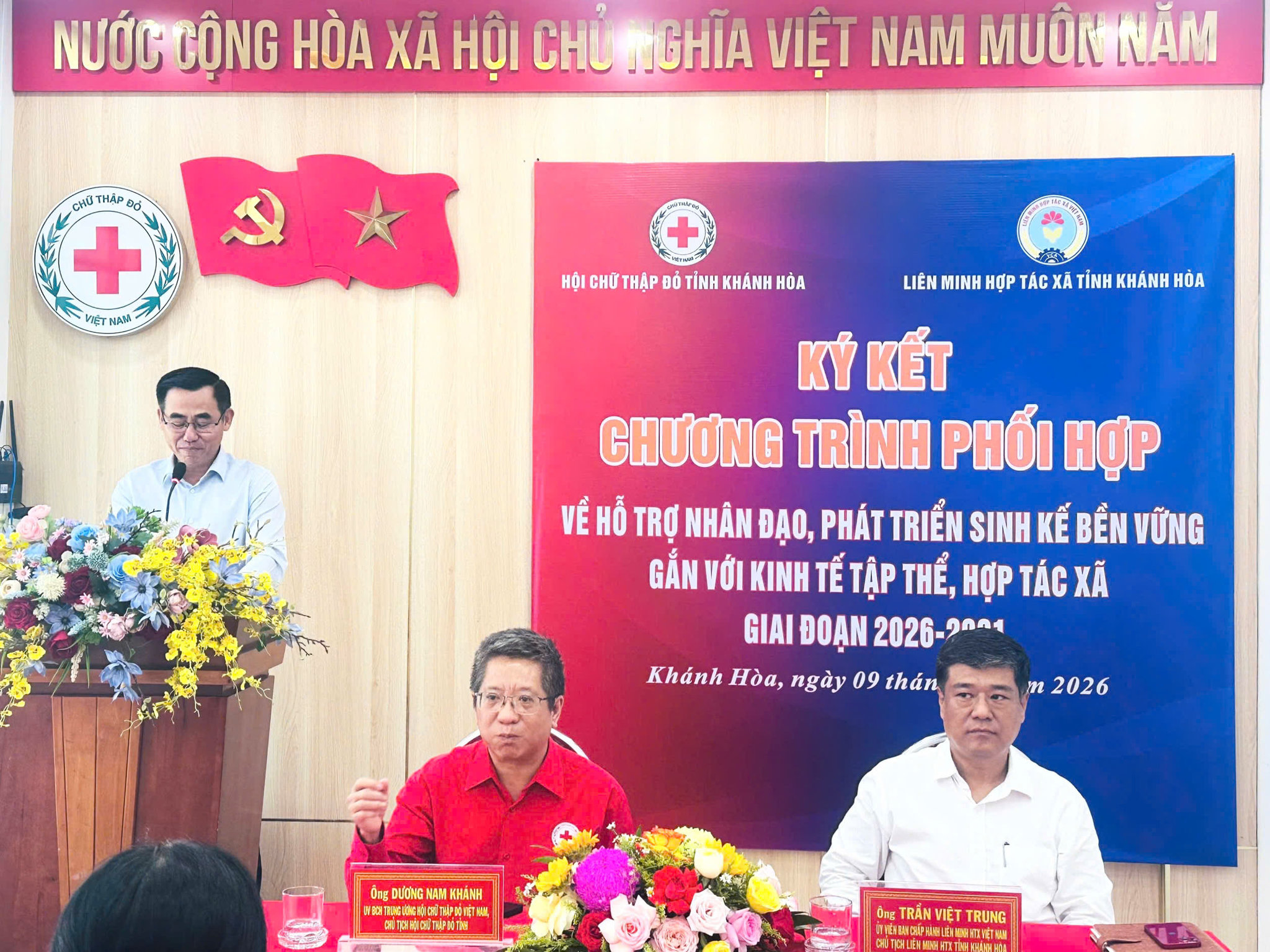
On 9 October 2026, the Khanh Hoa Provincial Red Cross and the Khanh Hoa Cooperative Alliance signed a joint cooperation programme for humanitarian assistance and sustainable livelihood development linked to the cooperative economy for 2026–2031. At the event, TrueCoop presented a cooperative-based initiative, initially proposed for Anh Dung and Bac Ai Dong communes. The initiative remains at the proposal stage, requiring field assessments, agreement on implementation arrangements and the mobilisation of appropriate resources.
Key Insights
Human-centered livelihoods place people’s dignity, capabilities and choices at the centre of development.
The proposed model connects organic cashew production, a community nursery and support from farm to market.
Priority participants include ethnic minority households, disadvantaged families and young people seeking agricultural livelihoods.
Community participation, transparent selection and clearly defined responsibilities will guide implementation.
Targets, budgets and timelines will need to reflect field assessments, available resources and agreed commitments.
From Immediate Assistance to Long-Term Self-Reliance
Humanitarian action helps people overcome immediate difficulties while creating opportunities for greater security in the future. For TrueCoop, human-centered livelihoods mean supporting employment and income generation while respecting each family’s circumstances, knowledge and decisions. The objective is to help people develop the capabilities and relationships they need to shape their own lives.
Priority groups include ethnic minority households, poor and near-poor families, vulnerable households, and young people who wish to build an agricultural livelihood in their home communities. Support would extend beyond agricultural inputs to practical skills, production organisation and participation in value chains with viable markets. Local people would take an active role in decisions and share responsibility for the model’s development.
Three Areas of Action Along One Integrated Value Chain
Developing Organic Cashew-Growing Areas
The first proposed area of action is to develop organic cashew-growing areas connected with market demand and climate change adaptation. TrueCoop proposes working with local authorities and communities to identify interested and eligible households, then assess suitable support for their land, existing orchards and production capacity.
Depending on those assessments, support could include seedlings, orchard rehabilitation, cultivation techniques and production organisation. Intercropping with fruit trees or herbs could also be explored where local conditions are suitable, with the aim of diversifying income sources and strengthening livelihood resilience. Decisions would need to account for each household’s resources and ability to maintain the proposed activities.
Establishing a Community Nursery
The second area is a proposed “Community Nursery” linked to the young organic farmers programme. Alongside supplying seedlings, the nursery would provide a setting for vocational learning, hands-on technical training, local employment and the exchange of knowledge between generations.
With effective management, the nursery could help young people develop practical farming skills and an understanding of production standards. It would also introduce the planning and cooperative relationships involved in bringing agricultural products to market. Its contribution would depend on clear operating arrangements, suitable resources and sustained participation.
Supporting Production from Farm to Market
The third area connects technical guidance and production organisation with relevant certification, traceability, procurement, processing and sales. These activities would be developed under specific agreements, giving participants a clearer understanding of the requirements and responsibilities along the value chain.
A livelihood model needs products that meet quality requirements, buyers willing to purchase them and commercial arrangements that deliver fair returns to producers. Connecting these elements from the outset would help households understand how their work in the orchard relates to the opportunities available for their harvest.
Anh Dung and Bac Ai Dong: Building Partnerships at the Grassroots
To develop the proposal into practical activities, TrueCoop calls on local Party committees, authorities, the Vietnam Fatherland Front, socio-political organisations and communities in Anh Dung and Bac Ai Dong to support the next steps. Their involvement would help facilitate field assessments, identify households with genuine needs, communicate the proposed model and address obstacles within their respective mandates.
Transparent participant selection, community consent and proper use of resources must remain priorities. Households should receive clear information about the support being considered, the conditions of participation and the responsibilities they would undertake. This provides a basis for informed decisions and realistic expectations.
For farming households, participation is also an opportunity to take initiative. Community members can explain their needs, contribute knowledge about their land, join technical training, care for their orchards and cooperate voluntarily in production. Their experience is essential to shaping a model that responds to everyday conditions and can be maintained over time.
Bringing Complementary Experience Together
Each organisation brings a distinct contribution. The Khanh Hoa Provincial Red Cross offers expertise in identifying needs and mobilising humanitarian resources. The Khanh Hoa Cooperative Alliance can advise on cooperative-economy models and connect relevant organisations. TrueCoop contributes experience in organising organic cashew value chains.
Clearly defined responsibilities would help these contributions form a practical implementation framework. Assessments can establish household needs, technical planning can identify suitable production activities, and specific agreements can clarify purchasing and market arrangements. Together, these steps would help turn initial assistance into productive capacity that communities can continue to develop.
The Connection Between TrueCoop and BioValley Vietnam
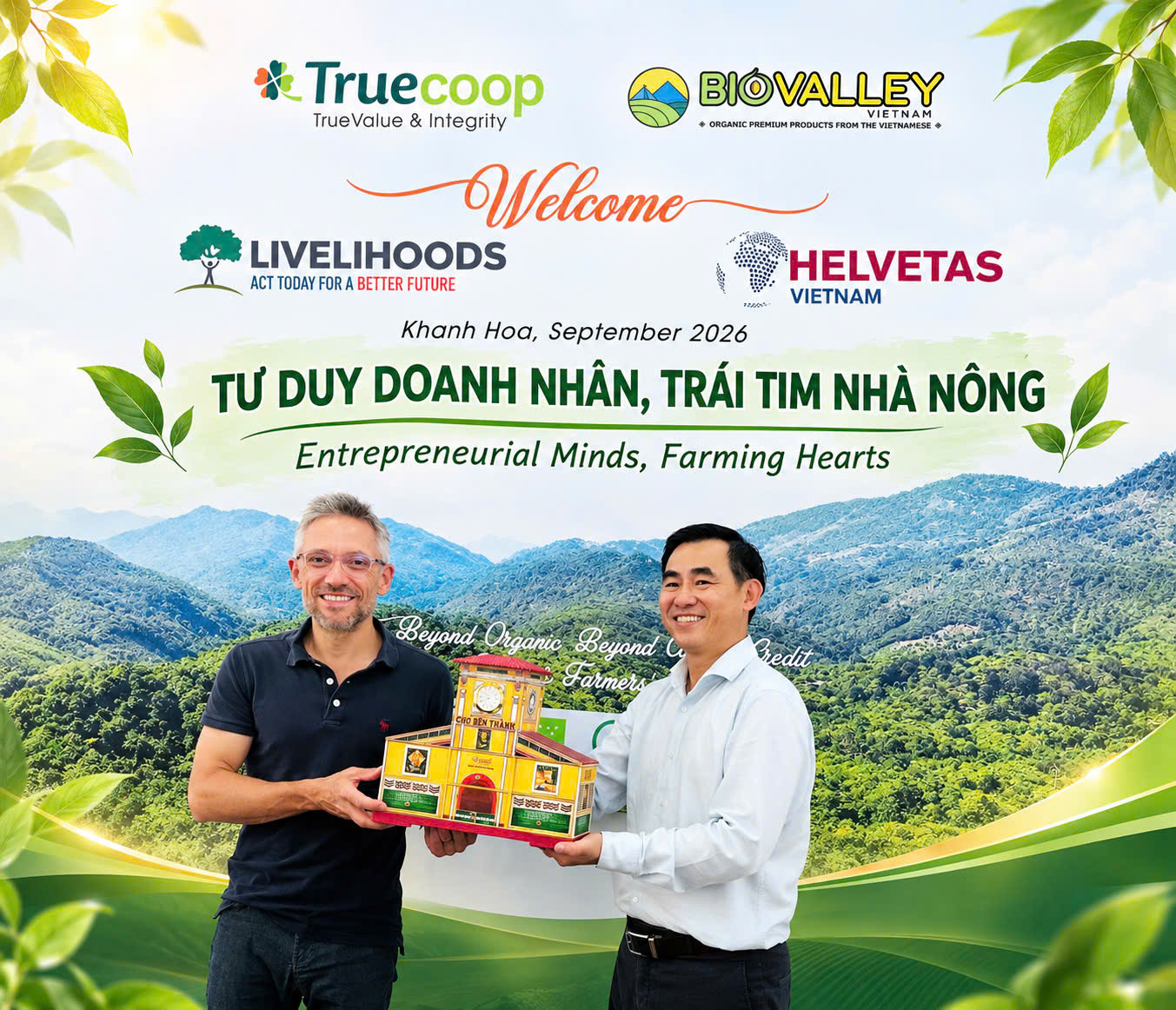
TrueCoop and BioValley Vietnam share a founding history through Trương Thanh Viện, also known as Osca Truong, and operate within a connected organic agricultural ecosystem. TrueCoop’s cooperative farming foundation connects growers and production, while BioValley’s work extends across sourcing, processing, quality management and international B2B supply.
The proposed livelihood model was presented by TrueCoop. Its emphasis on agricultural capability and market access provides context for the farmer relationships behind BioValley Vietnam’s organic sourcing approach, while the initiative’s implementation arrangements remain to be established.
Measuring Progress Through Family Livelihoods
The model’s effectiveness should be assessed through tangible outcomes for participating households. Relevant indicators include meaningful household participation, people trained and employed, orchard area rehabilitated, product quality, market access and changes in household income from one harvest to the next.
Targets, budgets and timelines should be established after field assessments, based on available resources and commitments from participating organisations. Monitoring should distinguish activities delivered from improvements achieved, allowing partners and communities to understand progress and make adjustments where needed.
If the initial models in Anh Dung and Bac Ai Dong demonstrate results, their lessons may be considered for other suitable areas, including Bac Ai Tay and Lam Son. Sustainability should guide any expansion: orchards need continued care, products need a route to market, and participating families need arrangements they can realistically maintain.
Working Alongside Communities to Build Their Futures
“Creating opportunities to earn a livelihood, and standing alongside communities as they build their own futures.”
Human-centered livelihoods recognise people as active participants in their own development. The proposed TrueCoop model seeks to create conditions in which families can produce more effectively, develop greater economic security and see opportunities within their home communities.
TrueCoop welcomes cooperation from local authorities, organisations, businesses, donors and, above all, the people of Anh Dung and Bac Ai Dong. Through shared responsibilities and practical commitments, today’s goodwill can become the foundation for meaningful results in the harvests ahead.