

Organic Cashews for Plant-Based Products: 7 Key Checks
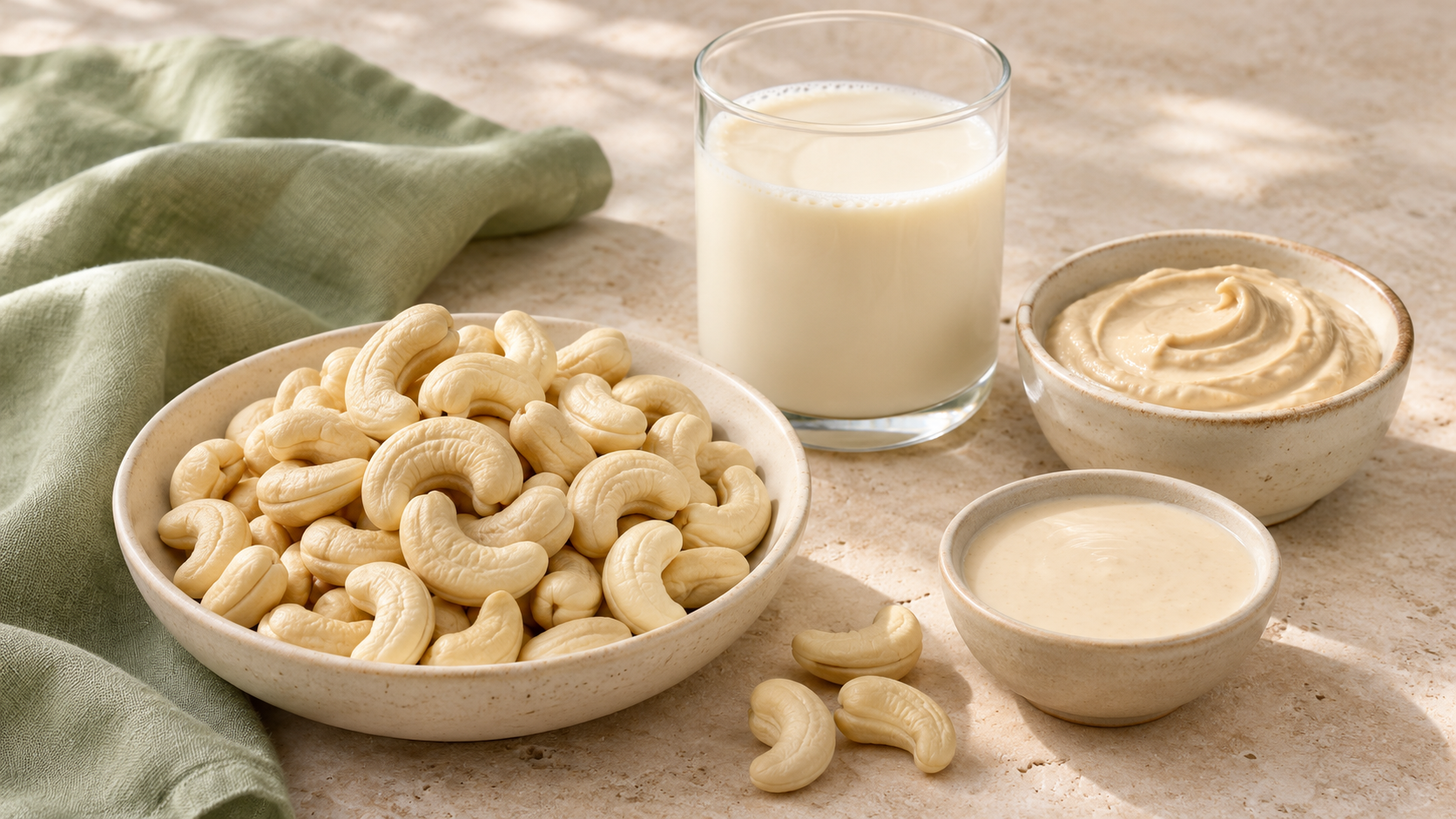
Organic Cashews for Plant-Based Products: What to Check Before Sampling
Sourcing organic cashews for plant-based products starts with understanding how the ingredient will be used. A manufacturer developing a cashew beverage may have different requirements from a brand producing a savoury spread, a creamy sauce or a product containing visible nut pieces.
Before requesting samples, define the intended application, preferred kernel format, processing conditions and supporting documentation. These details help your supplier propose a relevant ingredient and help your development team design a more useful trial.
At BioValley Vietnam, our organic cashew kernels offer a starting point for ingredient sourcing discussions. This guide explains the questions buyers should resolve before sampling, from choosing whole kernels or pieces to connecting a laboratory trial with future commercial supply.
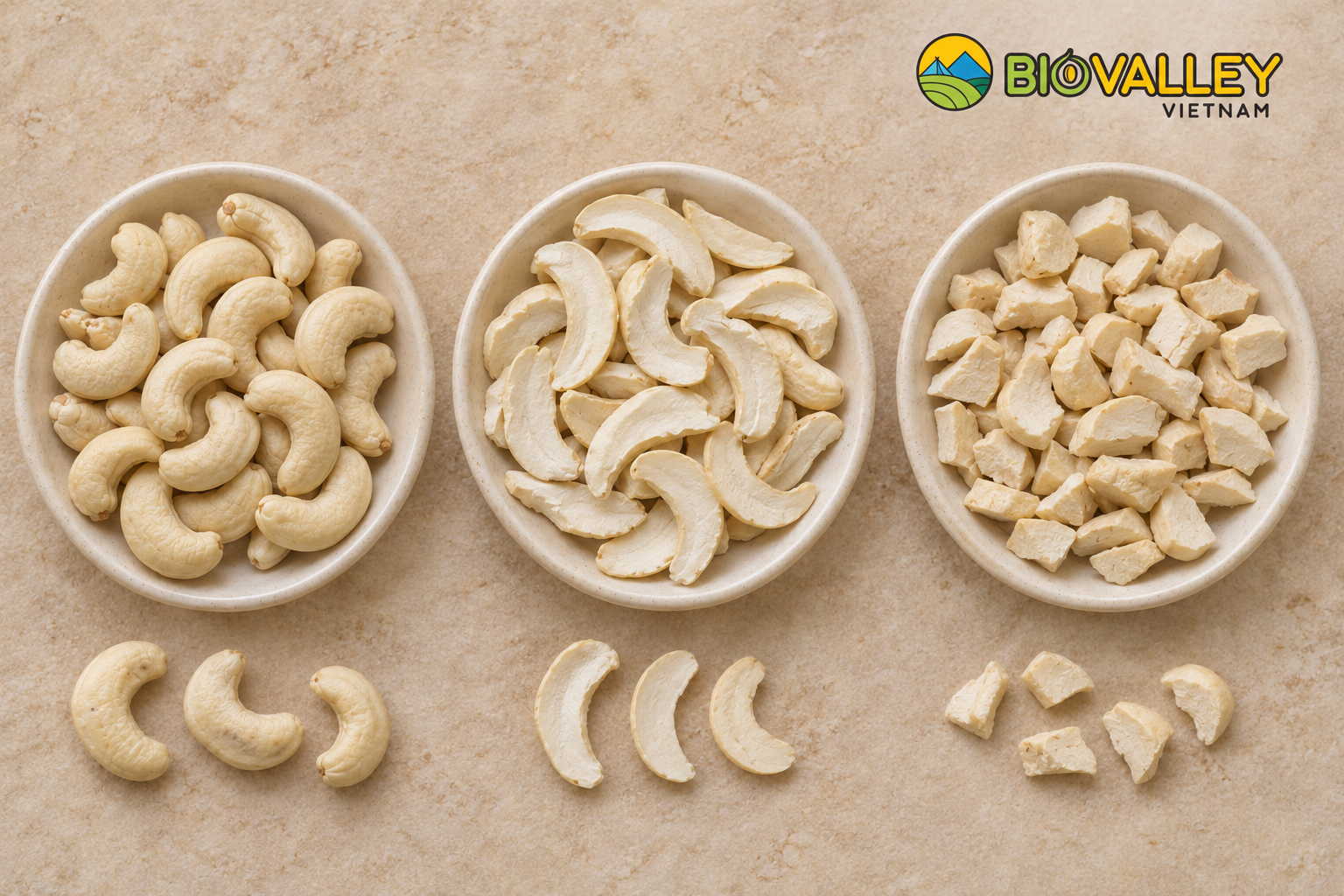
Choosing Organic Cashews for Plant-Based Products
A sample request becomes more useful when it describes the finished product rather than simply asking for “organic cashews.”
Will the cashews be blended into a beverage, ground into a spread, incorporated into a sauce or retained as a visible ingredient? What flavour, colour and texture should the finished product achieve?
Use the following table to prepare an application brief. These are considerations for development trials, rather than guarantees that a particular kernel format will deliver a specific result.
| ntended application | Questions to resolve before sampling | What to assess during development |
|---|---|---|
| Cashew beverages, often searched as cashew milk | Will the process include milling, filtration, homogenisation and heat treatment? | Flavour, mouthfeel, sedimentation, separation and performance after processing |
| Creamy sauces and dressings | Is the product heated, chilled or acidified? What texture is required? | Smoothness, viscosity, colour and behaviour in the complete recipe |
| Cashew spreads and dips | Is the target texture smooth or textured? How will the ingredient be ground? | Grind consistency, flavour, spreadability and oil separation |
| Fermented cashew products | What starter culture and controlled process will be used? | Performance under the manufacturer’s defined fermentation and safety protocol |
| Plant-based desserts | Will the product be chilled, frozen or heated? | Flavour, texture and physical stability under intended storage conditions |
| Products with visible cashew inclusions | What piece size and appearance should consumers see? | Size distribution, visual consistency and texture in the finished product |
For example, a beverage developer might request samples for a heat-treated, unsweetened formulation, while a dip manufacturer might prioritise performance in an acidified recipe. Sharing that distinction helps focus the sourcing discussion.
Research on plant-based beverages, including cashew formulations, demonstrates why composition, processing and storage need to be considered together. Results from one formulation should not be treated as a performance guarantee for another.
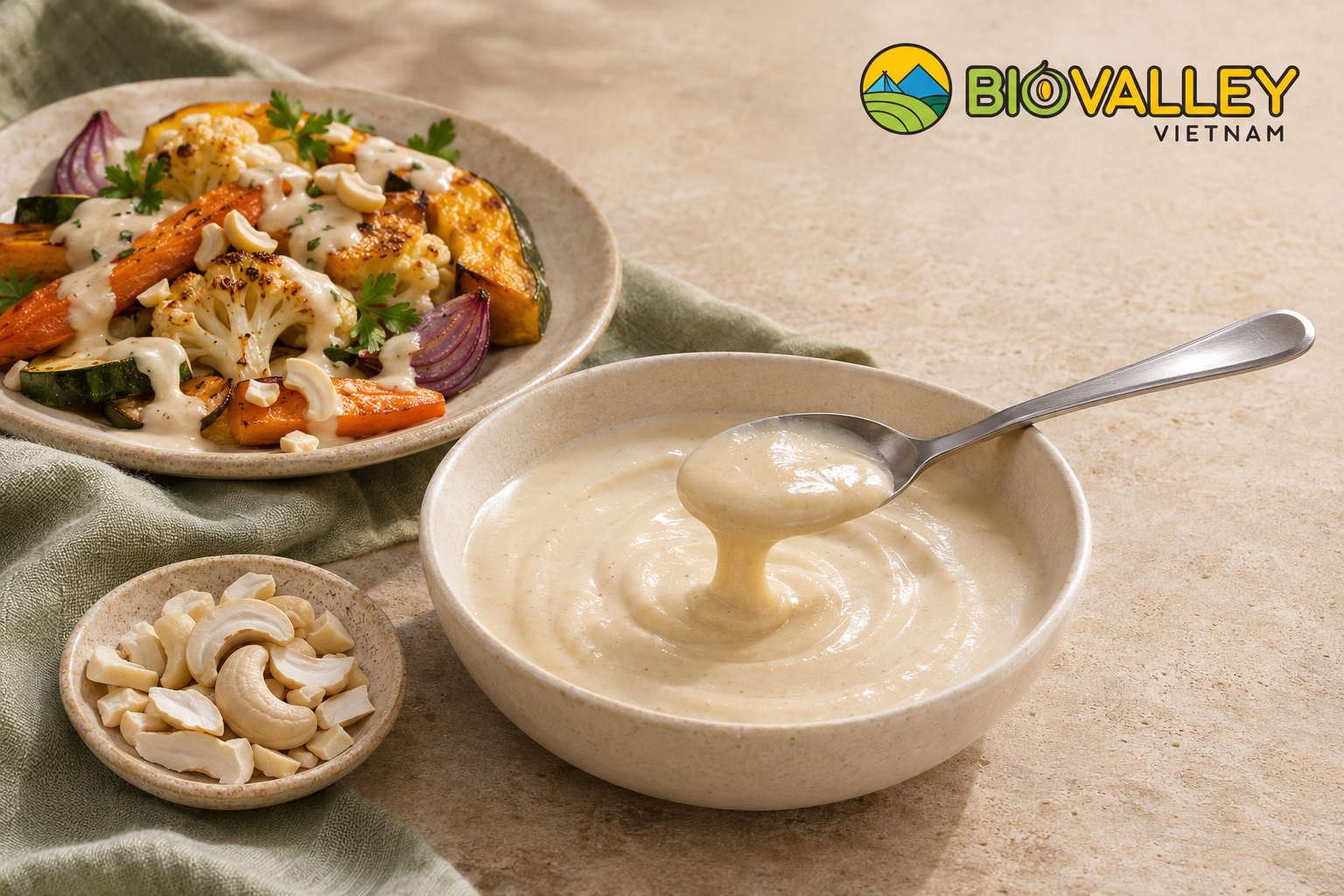
Choosing Whole Kernels, Splits or Organic Cashew Pieces
Whole-kernel size is useful information, but it does not establish how an ingredient will perform after grinding or blending.
BioValley’s published range includes whole kernels in W240, W320 and W450 grades, alongside WS white splits and LP large pieces. Buyers can discuss these formats against their intended application and current availability.
Whole kernels
Whole kernels may be relevant when appearance matters or when an existing purchasing specification requires a particular grade. They can also be included in processing trials where the buyer already has an established whole-kernel reference.
However, paying for a larger whole kernel should have a clear purpose if the entire ingredient will be milled.
Splits and pieces
Splits and pieces are worth evaluating for applications in which the original kernel shape will not remain visible. The decision should consider more than the quoted ingredient price.
Ask about the supplied size range, consistency, handling requirements and suitability for your equipment. Compare actual trial results before deciding whether a different format offers better value.
A broken kernel format is not, by itself, evidence of inferior quality. Evaluate each proposed ingredient against the agreed physical, sensory and food safety requirements.
Clarify Processing History Before Requesting “Raw” Cashews
The word “raw” can be interpreted differently during a sourcing discussion. It should not replace a clear description of the ingredient’s processing history.
Ask the supplier:
Is the ingredient unroasted, roasted, salted or otherwise formulated?
Which processing steps have already been completed?
Has a microbial reduction treatment been applied?
What evidence supports any stated treatment or ready-to-eat status?
What further processing is expected at the buyer’s facility?
For a recipe seeking a mild cashew profile, an unroasted, unsalted ingredient may be a useful starting point to discuss. A roasted ingredient may suit a different flavour brief. Neither choice should be made without considering the finished recipe.
BioValley’s kernel product information describes stages including steaming, drying, peeling, grading and packing. Buyers should confirm the actual processing route for the proposed product and order.
Routine processing steps should not be assumed to establish a validated microbial kill step. Your quality team should confirm the ingredient’s intended use and the safety controls required for the finished product.
Agree on an Ingredient Specification
A grade name alone is not a complete purchasing specification for plant-based food manufacturing.
Before sampling, identify which requirements are essential, which are preferences and which need to be established through development work.
| Specification area | Information to request or agree |
|---|---|
| Product identity | Cashew kernel format, grade, origin and ingredient composition |
| Physical characteristics | Size distribution, colour, defects and foreign-material requirements |
| Sensory characteristics | Expected flavour and aroma, with agreed rejection criteria |
| Moisture | Applicable limit and test method |
| Microbiological requirements | Parameters, limits, methods and sampling arrangements appropriate to the intended use |
| Chemical requirements | Relevant contaminant and residue requirements for the destination market |
| Treatment status | Processing history and evidence for any treatment claim |
| Organic coverage | Certification covering the relevant product and activities |
| Packing and storage | Pack format, storage conditions, shelf life and lot identification |
There is no single specification that suits every cashew beverage, dip or dessert. Requirements should reflect the product, manufacturing process and destination market.
Where a certificate of analysis is requested, clarify whether it relates to the actual lot under consideration or is an example provided during initial qualification.
Plan an Application Trial, Not Only a Kernel Tasting
Tasting the ingredient is useful, but it cannot answer every question about its performance in a finished product.
Before samples arrive, decide how they will be tested in your own process. Record the recipe, ingredient inclusion rate, equipment settings and evaluation conditions so that comparisons remain meaningful.
For cashew beverages
Consider evaluating flavour and mouthfeel after the planned milling, filtration and heat treatment. Record physical changes during the intended storage trial, including visible sediment or separation.
For sauces, spreads and dips
Assess the ingredient in the full recipe. Include the actual acid, salt, oil and other ingredients where relevant, rather than relying only on a cashew-and-water bench test.
For chilled or frozen products
Include the storage conditions and handling stages that matter to the finished product. A favourable result immediately after preparation does not establish shelf life.
If comparing whole kernels with pieces, begin with consistent trial conditions. Record any process adjustments separately so your team can distinguish an ingredient difference from an equipment or recipe change.
For the broader receiving and assessment process, use our organic cashew sample evaluation checklist.
Check Organic Certification and Allergen Requirements Separately
Organic status, plant-based positioning and allergen management answer different questions.
Organic ingredients and finished-product claims
Using certified organic cashews does not automatically make the finished beverage, sauce or spread eligible for an organic claim.
The complete formulation, processing and handling arrangements, certification scope and intended market must be reviewed. For example, USDA organic labelling rules distinguish between different product categories and organic ingredient percentages. Buyers should confirm the appropriate claim with their certifier before finalising packaging.
Our guide to BRCGS, HACCP and organic certification explains how to assess the different types of supplier documentation.
Cashew allergen management
Cashews are tree nuts and require appropriate allergen management. A plant-based formulation should not be presented as allergen-free simply because it contains no intentionally added dairy ingredient.
Ask for the ingredient’s allergen declaration, relevant cross-contact information and the controls applicable to the supplying facility. In the United States, FDA requirements include identifying the specific type of tree nut on applicable food labels.
Any dairy-free, vegan or other finished-product claim should be assessed against the complete formulation, manufacturing arrangements and applicable market requirements.
Compare Cost in Use and Commercial Supply
The lowest ingredient price does not necessarily produce the lowest finished-product cost.
When comparing proposed formats, consider:
Delivered ingredient cost.
Usable yield in your process.
Preparation and processing time.
Filtration or handling losses, where applicable.
Consistency against the finished-product specification.
Packaging suitability for your production batch size.
A useful internal comparison is:
Cashew ingredient cost per finished unit = delivered ingredient cost used in the trial ÷ saleable finished units produced.
Include relevant losses in the amount of ingredient consumed. Additional processing, labour, energy and other ingredient costs should be assessed separately.
Before moving from an approved sample to an order, confirm the proposed commercial format, quantity, lead time, packaging and verification arrangements. Establish whether the sample represents an available commercial lot, a general product reference or a development sample.
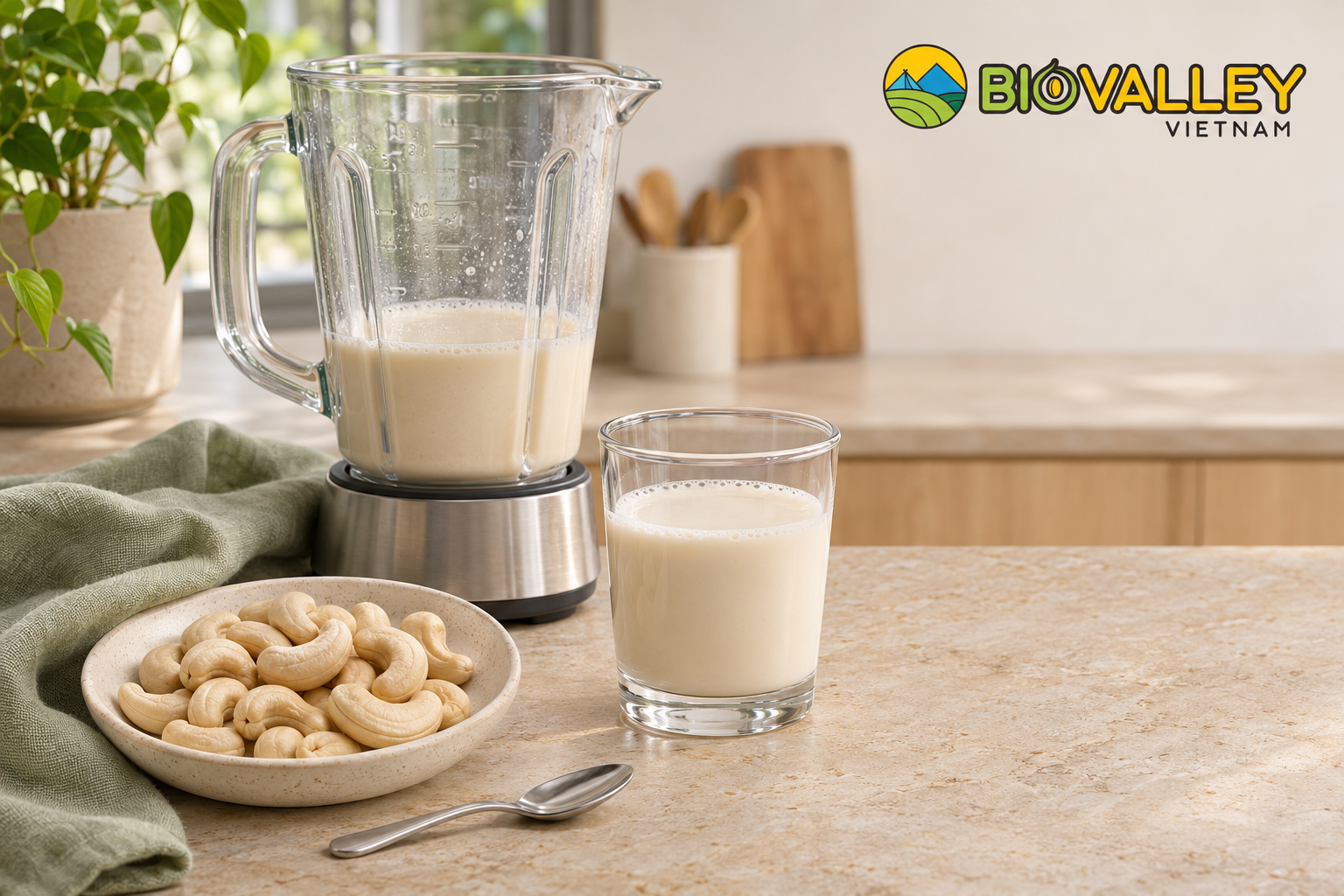
Discuss Organic Cashew Ingredients with BioValley Vietnam
For manufacturers sourcing organic cashews for plant-based products, BioValley Vietnam offers whole kernels, splits and pieces for consideration against the buyer’s application requirements.
Our sourcing background connects the ingredient discussion with Vietnamese farming communities, while our processing and packing capabilities provide further information for supplier assessment. Explore our organic raw material sourcing and factory information when preparing your enquiry.
To help our team understand your project, share:
The finished product you are developing.
Your destination market and intended claims.
Preferred kernel format, or formats you want to compare.
Main processing steps and technical requirements.
Required sample quantity and planned tests.
Estimated commercial volume, packing requirements and timeline.
The next step is to identify a relevant ingredient and the information needed for your assessment. Final formulation performance and finished-product validation remain part of your own development and quality process.
Developing a cashew beverage, sauce, spread or another plant-based product? Contact BioValley Vietnam to discuss organic cashew specifications, available formats and sample arrangements.
Frequently Asked Questions
Can organic cashew pieces be used for cashew milk?
Organic cashew pieces can be considered for beverage development where the kernels will be milled or blended. Their suitability depends on the agreed ingredient specification, processing equipment and results in the buyer’s formulation.
Do I need W320 whole kernels for a plant-based product?
Not necessarily. W320 is a whole-kernel grade, rather than a guarantee of performance in a beverage or spread. Compare suitable whole kernels, splits or pieces against your application requirements.
What should I request before receiving samples?
Start with the product specification, processing history, organic documentation, allergen information and relevant testing information. Explain the finished product and trial objectives so the supplier can propose an appropriate sample.
Does certified organic cashew make the finished product organic?
Not automatically. The finished product’s formulation, processing, handling and certification arrangements must meet the requirements of the intended market and claim.
Can BioValley supply finished cashew beverages?
This guide concerns cashew ingredient sourcing. Enquiries for finished beverages, premixes or specialist ingredient formats require separate confirmation of availability and scope.