
EUDR Compliance for Coffee Buyers: What to Trace Before December 2026
Introduction
The EU Deforestation Regulation has been delayed twice since it was first adopted, which has made it easy for buyers to treat the December 2026 deadline as another moving target. It isn't. The regulation's own text hasn't changed, only the application date has shifted, and as of the most recent European Commission confirmation, there are no further delays planned. EUDR compliance for coffee buyers now comes down to a fixed date and a specific, checkable set of requirements, and it's exactly the kind of requirement BioValley's coffee sourcing was already built around before the deadline made it urgent.
This guide sets out exactly what EUDR compliance requires for coffee specifically, what buyers need from their suppliers to trace it, and importantly what it does not cover, since one of the most common points of confusion is assuming the regulation applies more broadly than it does. Where relevant, it also covers how BioValley's coffee sourcing and traceability approach lines up against each requirement.
Key Insights
- EUDR applies to coffee. It does not currently apply to cashew, the regulation covers seven commodities (cattle, cocoa, coffee, palm oil, rubber, soy, and wood), and cashew is not among them.
- The compliance deadline is 30 December 2026 for large and medium operators, and 30 June 2027 for micro and small enterprises, confirmed by the European Commission as final, with no further delays planned.
- Coffee must be traceable to the exact geolocation of the plot where it was grown, and shown to be deforestation-free as of 31 December 2020.
- Vietnam is classified as a low-risk country under EUDR's country benchmarking system, which simplifies, but does not eliminate, the due diligence buyers still need to complete.
- The "operator" who files the Due Diligence Statement (DDS) is typically the EU-based importer, not the overseas supplier but the supplier has to provide the underlying plot-level data that makes that filing possible.

What Is EUDR, and Why December 2026 Specifically?
The EU Deforestation Regulation (Regulation (EU) 2023/1115) entered into force in June 2023, requiring that regulated commodities placed on the EU market, or exported from it, are demonstrably deforestation-free. It was originally set to apply from December 2024, then postponed a year to December 2025, and postponed again in December 2025 to its current date: 30 December 2026 for large and medium operators, 30 June 2027 for micro and small enterprises. The European Commission has stated it does not intend to reopen the regulation's core text again, which is what makes this date meaningfully different from the two that preceded it.
Does EUDR Apply to Cashew?
No. This is worth stating plainly because it's a common point of confusion for buyers sourcing multiple commodities from the same origin country, including buyers who source both organic cashew and organic coffee from BioValley. EUDR's scope covers seven commodities, cattle, cocoa, coffee, palm oil, rubber, soy, and wood, along with a defined list of derived products. Cashew is not on that list. If you're sourcing both BioValley's organic coffee and organic cashew, only the coffee shipment carries EUDR compliance obligations; the cashew shipment does not, under the regulation as it currently stands.
What "Deforestation-Free" Actually Means Under EUDR
A shipment qualifies as deforestation-free if the coffee was grown on land that had not been deforested or degraded after 31 December 2020, a fixed cutoff date, not a rolling window. This means a buyer's due diligence has to reach back to land-use history, not just current farming practice. It also means legality matters independently: the coffee has to have been produced in compliance with the relevant laws of the country of production (land rights, labor, environmental, and tax laws, among others), in addition to being deforestation-free.
Who Files the DDS: Buyer or Supplier?
This is a common point of confusion for overseas suppliers. The operator, generally the first party to place the coffee on the EU market, which for most import chains is the EU-based importer is the one who files the DDS. The supplier (the producer or exporter) doesn't file it, but has to supply the accurate plot-level geolocation and production data the operator needs in order to file. Downstream parties in the chain - roasters, distributors, retailers, generally reuse the upstream DDS reference number rather than filing a new one, under the simplification measures introduced in the second postponement.
In practice, this means the compliance risk sits with the EU buyer, but the compliance work, collecting and maintaining accurate farm-level data, sits upstream, with the supplier. A buyer who can't get complete geolocation data from their supplier inherits that gap directly. This is the specific gap BioValley's coffee sourcing is designed to close: supplying buyers with farm-level data they can put directly into a DDS filing, rather than a general sustainability statement that doesn't satisfy Article 9's geolocation requirement.
Vietnam's Country Risk Classification
Vietnam was classified as a low-risk country under the European Commission's country benchmarking system, published in May 2025, the classification that applies to BioValley's own coffee sourcing origin. This matters practically: low-risk classification allows for a simplified due diligence process and reduces the compliance-check rate EU authorities apply to operators sourcing from that country (1% for low-risk origins, versus 3% for standard-risk and 9% for high-risk). It does not, however, remove the underlying requirement to collect and hold geolocation and production data, a low-risk classification simplifies the process, it doesn't exempt a buyer from it, which is why BioValley maintains farm-level records regardless of the reduced check rate.
Compliance Timeline: Key Dates
| Date | Development |
|---|---|
| 29 June 2023 | EUDR (Regulation (EU) 2023/1115) enters into force |
| 22 May 2025 | European Commission publishes country risk classifications, Vietnam classified low-risk |
| 23 December 2025 | Regulation (EU) 2025/2650 confirms second postponement plus simplification measures (annual DDS statements, downstream reuse of upstream DDS reference numbers) |
| 30 December 2026 | Application date for large and medium operators |
| 30 June 2027 | Application date for micro and small enterprises |
| 30 December 2027 | Newly-added products (e.g., soluble coffee, added to scope via a July 2026 delegated act, pending scrutiny) become subject to EUDR |
What to Ask Your Coffee Supplier Before December 2026
- Can you provide geolocation data for every plot contributing to my order, not a regional average?
- How is that data collected and verified, self-reported by farmers, or checked against an independent source?
- Can you confirm the land wasn't deforested or degraded after 31 December 2020?
- What documentation do you hold showing compliance with local land-use and production laws?
- How is farm-level data connected to the specific batch or shipment I'm ordering?
- Are you prepared to supply this data in a format that plugs into my DDS filing, not just a general sustainability report?
How BioValley Supports EUDR-Ready Coffee Sourcing
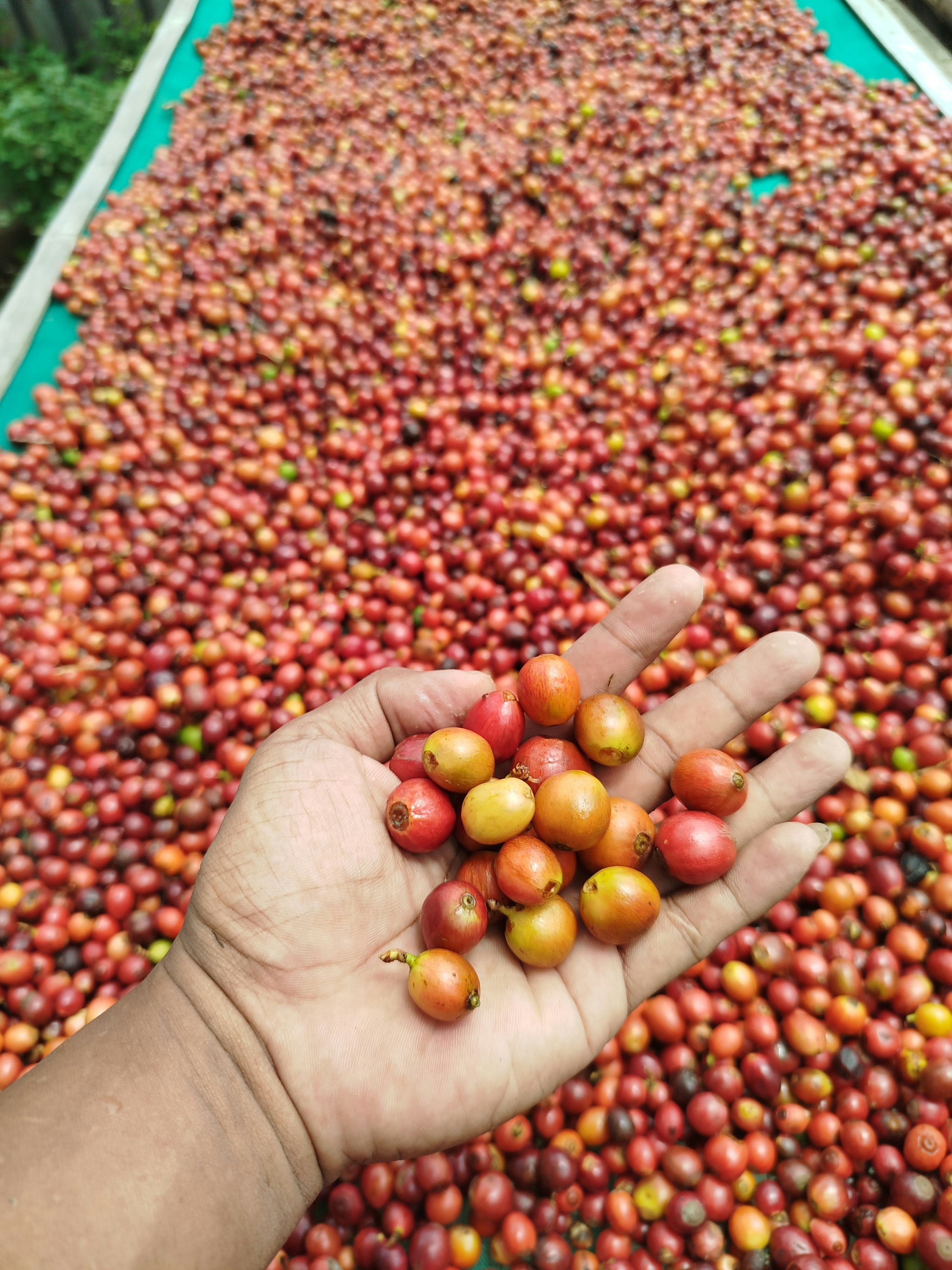
BioValley sources organic coffee through the same cooperative-based traceability model already built for its cashew supply chain, connecting individual farm data to specific harvests and shipments, rather than reporting supply at a regional or aggregate level. That structure is directly relevant to EUDR's plot-level geolocation requirement: a buyer working with BioValley on coffee is working with a supplier already organized around farm-level traceability, not one building it from scratch under deadline pressure.
Buyers can review BioValley's organic green bean coffee and organic roasted coffee product pages, or see the traceability system architecture on the traceability page (built for cashew, with the same underlying approach applied to coffee sourcing).
Sourcing coffee for EU delivery after December 2026? Contact BioValley to discuss EUDR-ready coffee sourcing!
Final Considerations: EUDR Compliance for Coffee Buyers Comes Down to One Question
EUDR compliance for coffee buyers comes down to one operational question: can your supplier give you plot-level geolocation data you can actually put into a DDS filing, or only a general sustainability claim that won't hold up to that specific requirement. Vietnam's low-risk classification helps on the margins, but it doesn't substitute for that underlying data. Buyers who confirm this now, months ahead of the December 2026 deadline, avoid discovering the gap when a shipment is already in transit.
Frequently Asked Questions
Does EUDR apply to cashew as well as coffee? No. EUDR's scope covers seven commodities: cattle, cocoa, coffee, palm oil, rubber, soy, and wood, and cashew is not included. If you're sourcing both from the same supplier, only the coffee shipment carries EUDR obligations under the current scope.
What is the actual EUDR deadline for coffee buyers? 30 December 2026 for large and medium operators; 30 June 2027 for micro and small enterprises. The European Commission has confirmed no further delays are planned.
Who is responsible for filing the Due Diligence Statement, the buyer or the supplier? The "operator", generally the EU-based importer placing the coffee on the EU market, files the DDS. The supplier doesn't file it but must provide the plot-level geolocation and production data the filing depends on.
Is Vietnamese coffee automatically compliant because Vietnam is low-risk? No. Low-risk classification simplifies the due diligence process and reduces compliance-check rates, but buyers still need to collect and hold geolocation and deforestation-free evidence, it isn't an exemption.
What geolocation data does EUDR actually require? The exact coordinates of every plot where the coffee was grown, with no sampling allowed, meaning plot-level data for each contributing farm rather than a regional estimate.